Showing posts with label Hobbies. Show all posts

Friday, February 14, 2014

Caring for Crystal Items

Crystal is a high quality form of glass, produced with lead oxide which creates light reflection. The rainbow of light reflection is the quality that makes crystal so interesting and desired by crystal collectors and gift recipients.  Crystal pieces are delicate and need to be handled and cleaned with care. Keep in mind, most damage occurs when cleaning or moving pieces. Therefore, you must be careful each time you clean a crystal piece or move it to a new location.

When moving crystal objects, always carry one object or one part of a set at a time. It is best to wrap your hands around the body of the object rather than using an existing handle, rim, or projection for support. In general, it is not ideal to routinely wash the pieces. Each time a piece is handled for cleaning there is a greater risk of breakage through accidents and mishandling. If at all possible it is better to protect pieces from soiling and dust by placing them in a dust free area such as an enclosed curio cabinet, rather than washing them too often.  Also be sure they are kept well back from the edge of any shelf.

Objects should be kept free of dust, debris, and oily residues. Keeping them in a cabinet also prevents the items from being broken. If you must store crystal pieces, store each individual object separately. Do not stack or crowd items and avoid wrapping glass in tissue or newspaper, which may attract and hold dampness. When a piece has dust on it,.  is recommend you to use “Hair Dryer” on cool setting or canned air to get rid of dust.

Remember that fine crystal and glassware can crack or break when subjected to extremes of hot and cold. Lighting candles in candleholders is not recommended.  Light the candle prior to putting it into a crystal candle holder.  If an item has fingerprints on it, do not place it in a dishwasher. Fingerprints can be easily removed by using a small amount of glass cleaner with a soft, lint free cloth or washing your fine crystal and glassware by hand in moderately warm water with a mild lemon detergent and 1/4 cup ammonia (to prevent spotting). Rinse in clean water and air dry on a dish rack.

Using care and common sense when cleaning your crystal items will insure that they last for many years to come.


The Hobby Of Stamp Collecting

Stamp collecting is a popular and rewarding hobby. If you are just starting out and would like to know where to start, here are some helpful tips.

It is said that the first rule of stamp collecting is to find a particular type of stamp you think you would like to collect and to take care of your collection. Some suggestions for types of stamps to collect are location of the stamp (i.e. country, state, etc.), stamp design, or a stamp for a particular season/holiday.

Some people collect one issue of a stamp in volume, one type of stamp only (sometimes referred to as a specialist), and some people collect all the stamps that are able to.

Once you have decided what type of stamp collector you want to be and what sort of stamps you want to collect, you need to learn how to properly care for your stamps.

The first piece of advice is to always use stamp tongs when handling your stamps. While stamp tongs bear a resemblance to tweezers, they are different from tweezers in that they do not have pointy ends. Tweezers should not be used in place of actual stamp tongs as they may damage stamps.

Stamps should not be handled with fingers or laid out on bare table surfaces as the natural oil in human skin and any particulates that may be on the table will cause damage to the stamp over time. When viewing stamps, they should be laid out on a clean piece of paper to avoid as much contamination as possible.

The basic necessary supplies for stamp collecting are the stamp tongs, an envelope to store your stamps in and a storage box to store the envelopes in. It is important to note that the stamp tongs will need to be purchased from a stamp store or can be found at a stamp show.

Once your collection grows, it is suggested that you invest in glassine envelopes for your stamps. These envelopes are made for stamp collecting and are semi-transparent. The glassine material is found to have no harmful effects on the stamps it stores.

It is suggested that once your stamp collection has grown and you have isolated what particular types of stamps you like to collect, you may wish to invest in a album for stamp storage.


I Need A Candle Wall Sconce

A candle wall sconce is one of the lighting accessories you will find in all lighting stores. Sconces attach to the wall of any room and hold one or more candles of varying sizes. For example, you can have a candle wall sconce made from wrought iron that holds three or four votive candles. You can also have a candle wall sconce that looks like an old-fashioned oil lamp.

Contemporary candle sconces are made or brass, pewter, Tiffany glass and some are made of plastic. Each candle wall sconce has a plate that attaches to the wall, while not holding the candleholder close to the wall. When you light the candle, the flame is not near the wall, so you don’t have to worry that it could cause a fire. The wrought iron tealight candle holder sconce is a work of art and you can get this type of wall sconce in many different designs. There are wrought iron sconces with intricate carvings and shaped to look like harps and angels.

When you use candle wall sconces to decorate your home, guests will ask the name of your interior decorator. That is because accentuating a room with a candle wall sconce has become the decorating theme for contemporary homes. While the home is modern, the décor is a throwback to long ago times when every home had a wrought iron tealight candle holder sconce on the wall. You can also get these wrought iron candle holders that hold votive candles, taper and pillar candles.

A candle wall sconce is the perfect way to add accent lighting to any room of the home. If you have candle wall sconces mounted on either side of a picture or a tapestry on the wall, it will really show off the artwork to its best effect. The range of wall sconces that you can get is awesome and you may need some time to choose the one that best suits your décor. Take a look at the wrought iron triple French pillar that holds three round pillar candles. If you prefer smaller candles, the wrought iron tealight candle holder sconce might be more to your liking.

If you really want to see what is available in candle wall sconces, try an online search. The Internet is your best source of a wrought iron, brass or pewter candle wall sconce. With the many retailers with online catalogs, you can browse at your leisure and take as long as you like. No one will bother you and try to sell you anything and when you place an order for a candle wall sconce, it will be shipped right to your door. How much easier can it get than that?


Best Times for Bird Watching

One you have the birding bug, you will want to maximize your experience when it comes to sightings. Put another way, you will need to know the best times for bird watching.

Best Times for Bird Watching

There is something to be said for the chase being most of the fun in life. If you have caught the bird watching bug, the chase is definitely going to be part of your task in gaining new entries for your life list. Simply put, there are good, okay and great times to seek out sightings. Understand these times and you will be on your way to some excellent sightings.

A common mistake when birding is to assign human emotions and behavior to the birds you are viewing. Birds may appear to react as such, but they are not following typical human behavior. Instead, they appear to be primarily reacting to stimulus. This means it is foolhardy to assume they will follow the same schedule as we do. Yes, there are some similarities, but not too many.

The old cliché is the early bird gets the worm. As with most clichés, there is something to this one. Most species of birds tend to be active early in the morning, much as humans are unless I haven’t had my coffee yet. No, birds don’t drink coffee, but many species definitely have a hankering for breakfast. Plan on heading out early if you want to sight a particular species in an active phase.

Ironically, one of the poorer times to pursue bird watching is in the middle of the day. Although birds are in view, this tends to be an inactive time for many species. A better time to catch them is in the late afternoon when activity picks up before the onset of evening.

Undoubtedly, you are thinking of a variety of species that do not fit within this general guideline and you are correct to do so. The simple fact is every type of bird has different patterns of activity. The obvious examples are owls, which certainly are not going to be of much interest during the day given the fact most species are sleeping. The lesson, therefore, is to take a close look at the particular species you are interested in and then tailor your viewing habits to its schedule.

The best times for bird watching can generally be said to be the early morning and late afternoon. To avoid the occasional disappointment, make sure to research the specific tendencies of any particular bird you wish to observe.


Surfaces to Decoupage

Almost any surface can be used for decoupage, but different surfaces will require different treatment. Traditionally, wooden objects are used, especially furniture. But any smooth surface can be decoupaged. Trays, boxes, and picture frames are ideal for the beginner.

Before you begin, make sure that the item is clean and free from dust or flaking paint. Unfinished wood must be painted, stained, or sealed before decoupaging. If the item needs to be painted, use the appropriate paint and let it dry for twenty-four hours. It will also need to be lightly sanded so that the glue adheres better. We’ll discuss preparing surfaces for decoupage in further detail in the section on techniques.

Wood
New wood is easily available and it requires little preparation. Most suppliers have a large range of items. Varnished wood needs a light sanding before use to help the water based glues and varnishes to adhere properly. Old wood may take more preparation, but has a lot of character.

Metal
Old metal items also often have a lot of character. Local secondhand shops can be a great source.

Galvanized Steel
Galvanized steel is increasing in popularity and can now be obtained from craft shops. These items are delicate in appearance with intricate, scalloped lines. Some preparation is required to ensure proper adhesion. These items are extremely delicate and will chip if used roughly and regularly and so should be kept for decorative purposes. Try not to get water on the steel, especially if you are using it as a flower holder. Use another container inside the steel item.

Ceramics
Unglazed, bisque-fired ceramics are best for decoupage and come in a wide variety of shapes. These items are purely decorative. Hot food shouldn’t be served in them, only use them as containers for dry items such as pot pourri or nuts. Wipe clean with a damp cloth, but don’t immerse in water or put in the dishwasher.

Porcelain 
Once complete, you can use the item for what it was originally intended for. Serviettes are good to use as they are extremely thin and melt into the porcelain. Try to keep to lighter colors in porcelain, as serviettes will disappear altogether into a darker background.

Enamel
Enamel needs a light sanding and a coat of steel primer followed by a coat of universal undercoat. It can then be treated the same as porcelain.

Glass 
Glass needs a through clean with warm soapy water and a good rinse before being used. These items are usually for decorative use, but if you want to use your glass item, try using serviettes and porcelain medium on an ovenproof glass item that can be heated. Baking your item dry will seal and harden your artwork, making it more useable. Don’t immerse the item in water.

Candles
It’s best to use thicker candles as a thin one will burn too quickly, as well as being difficult to work with. They tend to burn down in the center, leaving a safe zone on the edge.

Soap
Any soap can be decoupaged, provided it isn’t too oily. The soap can be used although the picture will eventually come off. Decoupaged soap makes great gifts.

Once you’ve found an item you want to decoupage onto, you need to make sure that it’s free from dust and dirt. The surface may need sealing and you may need to paint the item first. Some surfaces will need sanding first. Don’t begin to decoupage until the item is clean and dry.

With the amount of work you’ve put in, you’ll want to keep your piece beautiful. Waxing periodically provides good protection. Wipe all spills immediately with a soft cloth. Don’t use furniture polish as it can cause a buildup and over time ruin the surface. A damp sponge or cloth works well for cleaning. Don’t place a piece of decoupage in direct sunlight, as it will fade over time.

Remember that varnish takes about a year to fully cure. Don’t put heavy objects on a flat decoupaged surface for at least a year or they will cause dents in the surface. Once the surface has hardened, this isn’t so important. Varnish dries from the top down, so although it may feel hard and dry on the surface it can still be soft further down.

Any small chips that occur over time should be repaired as soon as possible. If the varnish is chipped but the decoupage has no damage, sand the surface. Apply a drop of varnish and allow to dry. Repeat until the chip is filled.  Decoupage is not hard to care for and with proper care it will last forever.


Scrapbooking Tips

Have you ever found a very old family photo album, perhaps in your grandparent’s house, and had no idea who the people in the photographs were? Sometimes no one remembers who they are, and a part of your family history is lost forever.

One of the most frustrating things about finding old photos or old albums is the lack of information in them. Often there is nothing to identify the photos. No names, no dates, no locations.

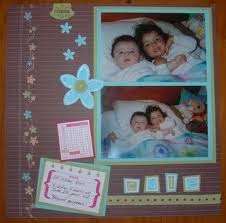
One way to keep that from happening with the albums that you create is to take the time to journal in them. Today, creating photo albums has become an art form known as scrapbooking. These scrapbooks are more than just photos on a page. They are family histories, meant to be handed down from generation to generation.

Journaling is important for several reasons. First of all, it will provide valuable genealogical information for future generations. Secondly, journaling is a way for you to make sure the stories of your life and your family’s life are persevered. Also, it allows those with whom you share your albums to look through them without having to have you narrate through the entire album. They can take their time to browse through the album, enjoying the photos and reading the captions and stories.

What do you need to journal in your album? 
You need to have acid free, permanent pens that are created for scrapbooking. It’s important to choose these types of pens because they are photo safe. They will not damage the surrounding photos as time passes. You may want to have pens in a variety of colors or just black. The colors you use, however, are not as important as getting the words on the page.

At the very least you should write identifying information associated with your photos. This would be people’s names and who they were in relationship to you. It could be as simple as “My cousin Jack White, “our neighbor Bill Smith,” or “my co-worker and good friend Jill Jones.”  Identifying people with a little more information than just their names will be helpful to those looking through your albums. Other important identifying information would be dates and locations.

In addition to identifying information, many people choose to go further in their journaling. They tell stories that go along with the photographs. These can be short paragraphs that highlight what was going on or entire pages of written memories.

If you’re new to journaling and unsure how to fit it into your album, try some of these tips:

Lists are great to put in an album instead of just straight paragraphs. For example, if you are doing an album for a toddler you can make lists of their favorite things – food, books, toys, tv programs, songs, etc. and sprinkle them throughout the album where there are blank spaces.

Ask others to write in your albums. Get your kid’s dad to write his point of view of his fourth birthday party. Have a friend you took a trip with write her thoughts on the trip.

Use poems or quotes that are appropriate to fill in some blank spaces. Have a little white space left on the page of Halloween pictures? Find a cute pumpkin poem to fill it in.

Whether you choose to simply write in the important identifying information or go a step further and tell stories with your albums, journaling will make your albums more personal. It will also leave future generations with valuable information that they will be grateful for.


Related Posts Plugin for WordPress, Blogger...